
Duchesne 24 Hour Release Status
No official Duchesne County Sheriff 24-hour release feed was found on the county jail pages reviewed for this project. The county publishes facility and contact information, but it supplies no person-level roster, recent-release tab, daily archive, release filter, stated refresh schedule, or booking-photo gallery. There is therefore no county URL that can honestly be presented as a live list of today's Duchesne County releases.
The direct operational path is the Duchesne County Jail at 435-738-0190. Give the full name, date of birth or booking number when known, and an approximate booking date. Ask whether the person left physical custody, when the event was recorded, and whether the disposition was community release or transfer. A phone response from Sheriff Travis Tucker's office can answer an urgent routing question, while the Sheriff's booking-and-release record supplies documentary confirmation.
Check Duchesne Daily Releases
Define the daily interval before calling or filing a request. “Today” can shift as the clock passes midnight, and a 24-hour span is not always the same as one calendar date. Use a start and end timestamp in local time. The Sheriff's records officer can then determine whether a releasable daily log or report exists without guessing at the jail system's fields.
- Review the official Duchesne County Jail information for the current jail contact. It has no inmate search.
- Call 435-738-0190 and give enough identifying information to separate people with similar names. Ask staff to distinguish release from transfer.
- For a daily group record, request all releasable jail releases between exact start and end timestamps. Ask whether an existing report can be produced.
- For one named person, request the booking-and-release entry and compare it with the court case. The broader named-person path appears in the Duchesne County released inmates search.
- If the record says UDC, federal, or immigration transfer, use that receiving authority's official locator. The county custody episode ended, but community release may not have occurred.
Note: Record the time of each check because a same-day oral answer and a later written record may reflect different stages of processing.
Duchesne Daily Release Fields
Because Duchesne County publishes no online 24-hour list, none of the fields below are promised web fields. They are narrowly framed items to ask the Sheriff to provide if they exist and are public. GRAMA, Utah's Government Records Access and Management Act, permits the agency to classify or redact protected material. A useful request asks for segregable public portions rather than assuming the full jail file is open.
| Requested field | What it can establish |
|---|---|
| Legal name and booking identifier | Connects the release entry to the correct jail episode |
| Booking date and time | Defines when the custody episode began |
| Release timestamp | Shows when Duchesne physical custody ended |
| Release disposition or type | Distinguishes bond, court order, time served, monitoring, or another recorded outcome |
| Releasing authority | Identifies the court, jail, or other authority tied to the event |
| Transfer destination | Shows whether UDC, another jail, or a federal body continued custody, if public |
| Charges and bond disposition | Provides case context without proving the final case outcome by itself |
The court establishes what it ordered. The jail record establishes when staff completed the physical custody event. Those records answer different parts of the same-day release question.
Ask for the release disposition in plain terms. A bond entry shows custody ended while the case continued. Time served or sentence completion ties the event to a local sentence calculation. A court order may direct release without resolving every charge. Monitoring moves the person outside the cellblock under active conditions. Transfer closes the Duchesne episode while another government keeps custody. If the response uses a code or short label, ask the records officer what that code means in the jail system instead of expanding it from guesswork.
Identity also matters in a daily group record. Similar names can lead to a false match, while an alias can hide the right entry. Use the booking number where available and compare the booking date with the case. Date of birth or age may help staff locate a record, but protected personal details may be redacted from the public copy. A precise request improves the search without demanding more data than the release question needs.
Duchesne Release Records Request
The county's Electronic Records page routes Sheriff requests to a dedicated online portal. A written request should provide the requester's name, mailing address, daytime telephone if available, and a description that identifies the record with reasonable detail. Duchesne states an ordinary response period of ten business days, subject to extraordinary circumstances. The county may require advance payment and allows cost-based fees, so request an electronic copy and a fee estimate before work exceeds a set limit.
A daily request can ask for “all releasable Duchesne County Jail release-log entries from [start timestamp] through [end timestamp], including name, booking number, booking and release timestamps, release disposition, releasing authority, and transfer destination if public.” That wording does not claim a daily report exists. It gives the records officer a clear interval and field set.
Open the official Sheriff NextRequest source to see the submission route used for documentary daily-release requests.
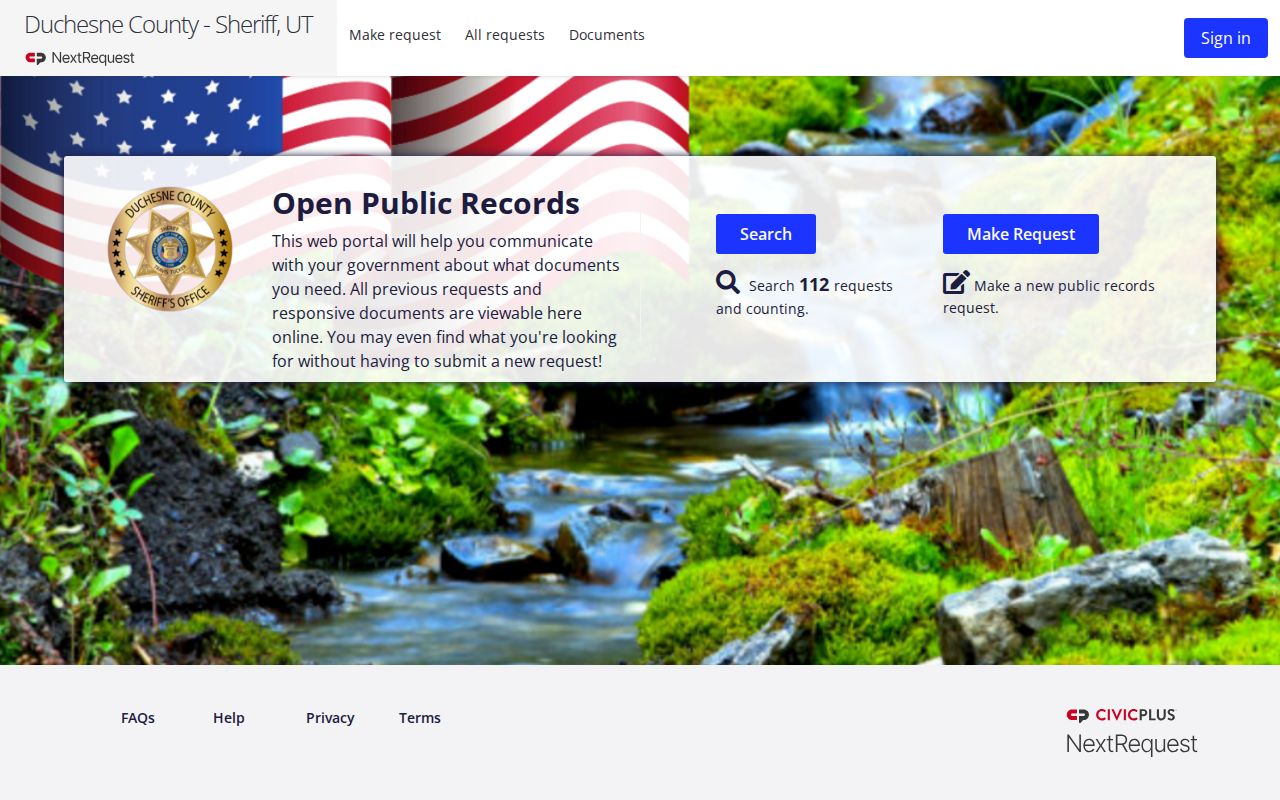
The portal supplies the written fallback when the county offers no public daily release feed.
If the office denies or redacts part of the request, ask for the record classification and statutory basis. A partial response can still confirm the timestamp, basic disposition, and receiving authority while withholding protected content. GRAMA also provides an appeal process, but the first practical step is often to narrow an overbroad request or clarify which existing log entry would answer the daily-release question.
Duchesne Release or Transfer
Duchesne County Jail holds both county detainees and Utah state inmates under contract. That mixed population makes a same-day “release” entry easy to misread. A local detainee may leave on bond, recognizance, a court order, sentence completion, or pretrial monitoring. A state inmate can leave the Duchesne cellblock but remain under UDC authority during movement to a state facility.
UDC says people housed in county jails are almost always taken through the Utah State Correctional Facility for state release processing. Direct state release from a contract jail is extremely rare. If Duchesne records a transfer to UDC, use the UDC Offender Search and the newest Board decision. A federal or ICE destination also indicates continued custody until the receiving source says otherwise.
| Record result | Meaning | Next check |
|---|---|---|
| Community release | Duchesne physical custody ended under the recorded disposition | Court docket for the legal order and remaining case terms |
| Pre-Trial Monitoring | Person left the cellblock but remains subject to case conditions | Sheriff monitoring contact and court case |
| UDC transfer | State custody continued | UDC search and Board decisions |
| Federal or ICE transfer | Another custodian may hold the person | Receiving federal locator and transfer record |
Duchesne Pretrial Release Monitoring
Duchesne's Pre-Trial Monitoring Program is a documented local alternative to jail confinement. A person on monitoring has physically left the jail cellblock, so the placement may appear in a daily release record. The criminal case is not necessarily over. Conditions may still apply, and the court retains authority over the pending matter.
The official jail page lists operational and finance contacts for this program. Confirm the placement through the Sheriff and the court case rather than calling it probation, parole, or sentence discharge. Those labels come from different authorities. Monitoring is one reason a proper 24-hour release record needs both a disposition and a destination, not just a name and time.
Note: “Out of jail” describes physical location; the court and Sheriff records supply the legal status attached to a monitoring placement.
No Duchesne Rolling Release Window
The county's official presentation is facility-information-first. It does not state an online retention period because it has no published release feed to retain. A general Sheriff statement that most office records are kept for ten years cannot be converted into a promise that booking or release entries remain online for that span. Web display and agency retention are separate questions.
Review the official jail source that provides contact and facility details without a recent-release control.
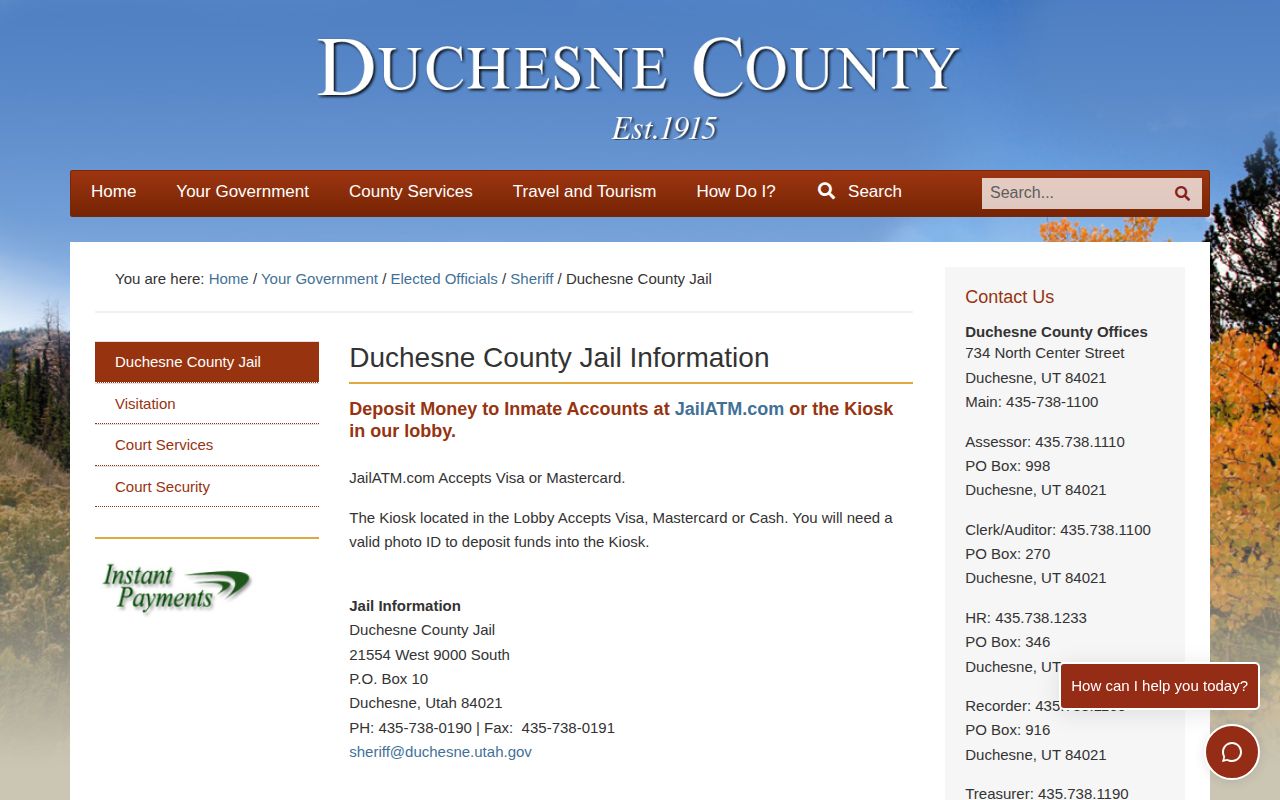
The captured page shows why phone and GRAMA confirmation lead the Duchesne daily-release path.
A public court case can add the reason behind a same-day custody change. Utah XChange may show bond, dismissal, a sentence, probation, warrants, and other docket events. Free public access is available at most district courthouses and the State Law Library, while access at a justice court should be checked first. The court record does not usually supply the exact moment the jail completed release, so retain the Sheriff timestamp as the physical-custody proof.
For UDC inmates, the state offender tool covers only current supervision. A paroled person may still appear because parole remains UDC supervision, while a person fully discharged may no longer appear. That boundary is why neither a UDC no-result nor the absence of a Duchesne roster entry can substitute for the correct daily release record.
For a wider request interval, the Duchesne County 72-Hour Release List explains how to define a three-day window without turning separate commercial pages into an official record.